Call Us

+91 97242 27659

Email Us

nutralpowertech@gmail.com

Solar Panel

An Electrical Solar Panel, correctly called a Photovoltaic (PV) Module, is a device that directly converts light energy from the sun (photons) into usable direct current (1$\text{DC}$) electricity.2 This process is known as the Photovoltaic Effect.3

Solar panels are the cornerstone of solar power systems, providing a clean, renewable, and sustainable source of energy for applications ranging from small calculators to large utility-scale power plants.4

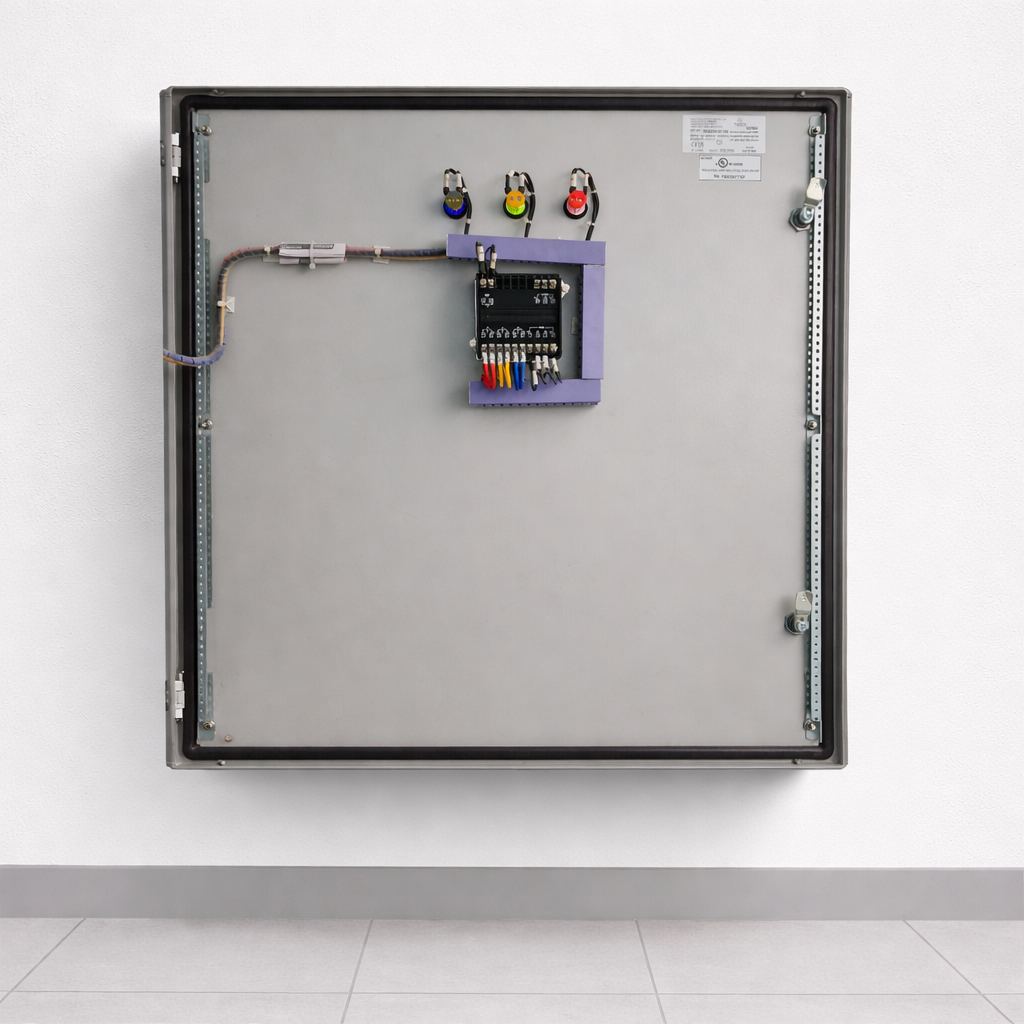
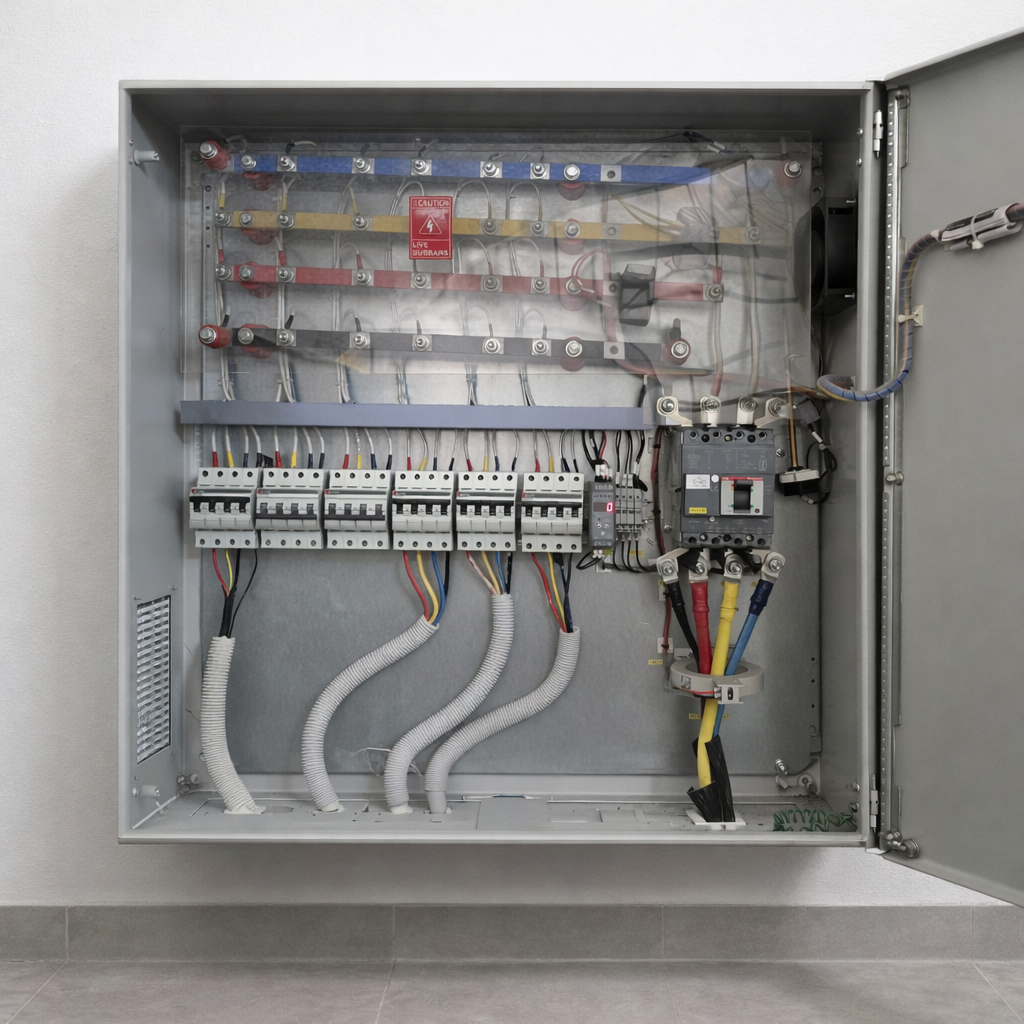
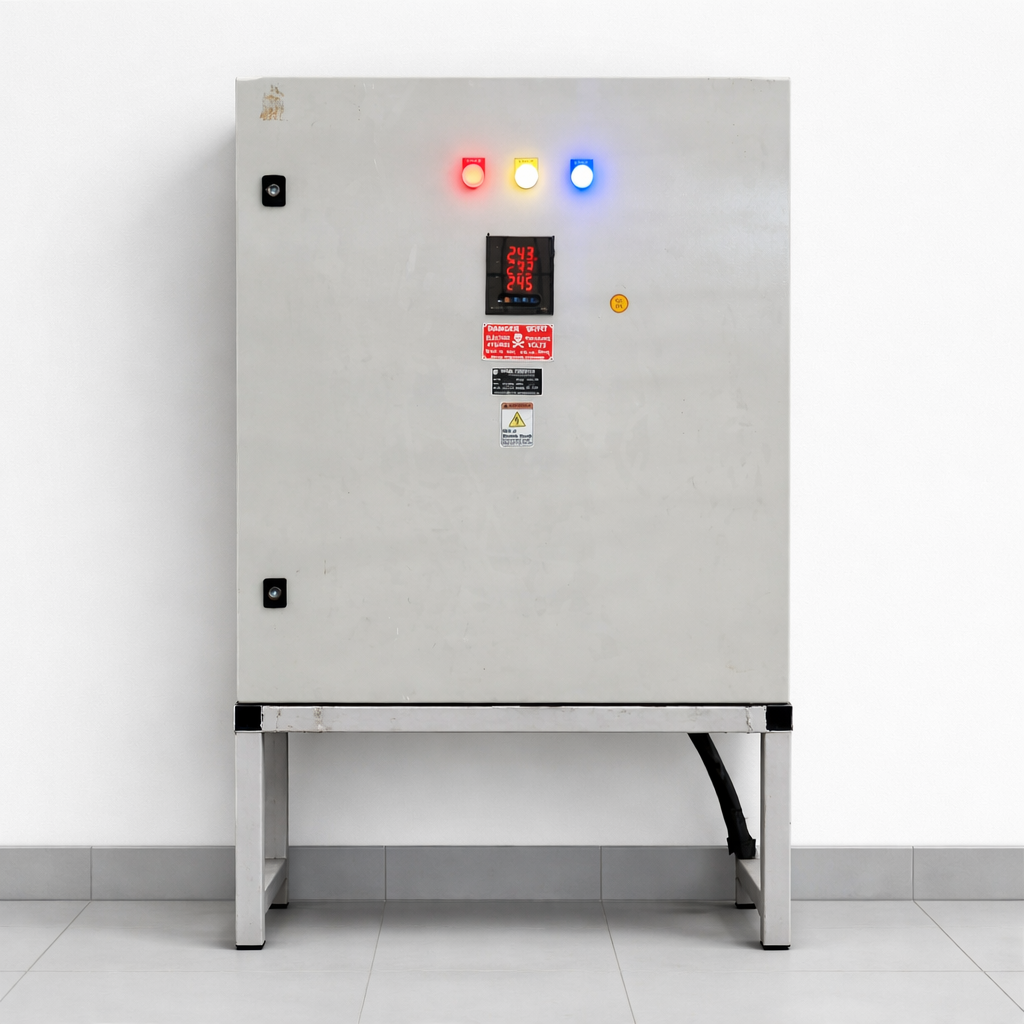
The PMCC panel serves as the main electrical distribution point for your facility's entire power system, while simultaneously providing centralized control and protection for all connected electric motors. It is the definitive solution for streamlining your power infrastructure, reducing footprint, and simplifying maintenance.
How a Solar Panel Works

The conversion of light into electricity happens at the level of the solar cell, the fundamental building block of the panel.

Material

Solar cells are typically made from silicon, a semiconductor material. During manufacturing, silicon is doped to create two layers: an N-type layer (extra electrons, negative charge) and a P-type layer (electron deficiency, positive charge).

P-N Junction

When these two layers are placed together, they form an internal electric field at the junction that enables charge movement.

Photovoltaic Effect

When photons (light particles) strike the cell, they transfer their energy to electrons in the silicon. If the energy is sufficient, electrons are knocked loose from their atoms.

Current Flow

The electric field at the P-N junction forces the free electrons to move in one direction across the N-type layer. This creates a directed flow of electrons, producing direct current (DC) electricity.

Series & Parallel Wiring

Individual solar cells are wired in series and parallel to form a PV module (panel), delivering the required voltage and current output.

Components of a Solar Power System

A single solar panel is only one part of a complete solar energy system. The full system typically includes:

Component Function
Solar Panels (PV Modules) Convert sunlight into DC electricity.
Mounting/Racking The frame and hardware used to securely fix the panels to a roof or the ground, optimizing their angle and orientation.
Inverter The most critical electronic component. It converts the raw DC electricity from the panels into Alternating Current (AC) electricity, which is the standard current type used by homes, businesses, and the main utility grid.
Balance of System (BOS) Includes all the electrical components like wiring, junction boxes, disconnect switches, and meters.
Batteries (Optional) Used in off-grid systems or grid-tied systems with backup to store excess DC energy for use at night or during power outages.

These components work together to deliver clean, reliable, and efficient solar energy for homes, industries, and commercial applications.

Main Types of Solar Panels

Solar panels are primarily categorized by the type of silicon used, which affects their performance and cost:

Type Description Key Features
Monocrystalline (Mono-Si) Made from a single, high-purity silicon crystal ingot. Highest efficiency (typically ~20%+), darkest black color, higher cost, and best for limited space.
Polycrystalline (Poly-Si) Made from melted and blended silicon fragments. Lower efficiency (typically ~15%–17%), blue color, lower manufacturing cost, and requires more space for the same output.
Thin-Film Made by depositing thin layers of photovoltaic material (like amorphous silicon or Cadmium Telluride) onto a substrate. Lowest efficiency, lowest cost, often flexible and lightweight, but requires the most surface area.

These panel types vary in efficiency, cost, and appearance, helping users select the right option for their needs.