1
Contactor
An electrically controlled switch that connects the motor to the main power lines when its coil is energized. It is the primary switching device.
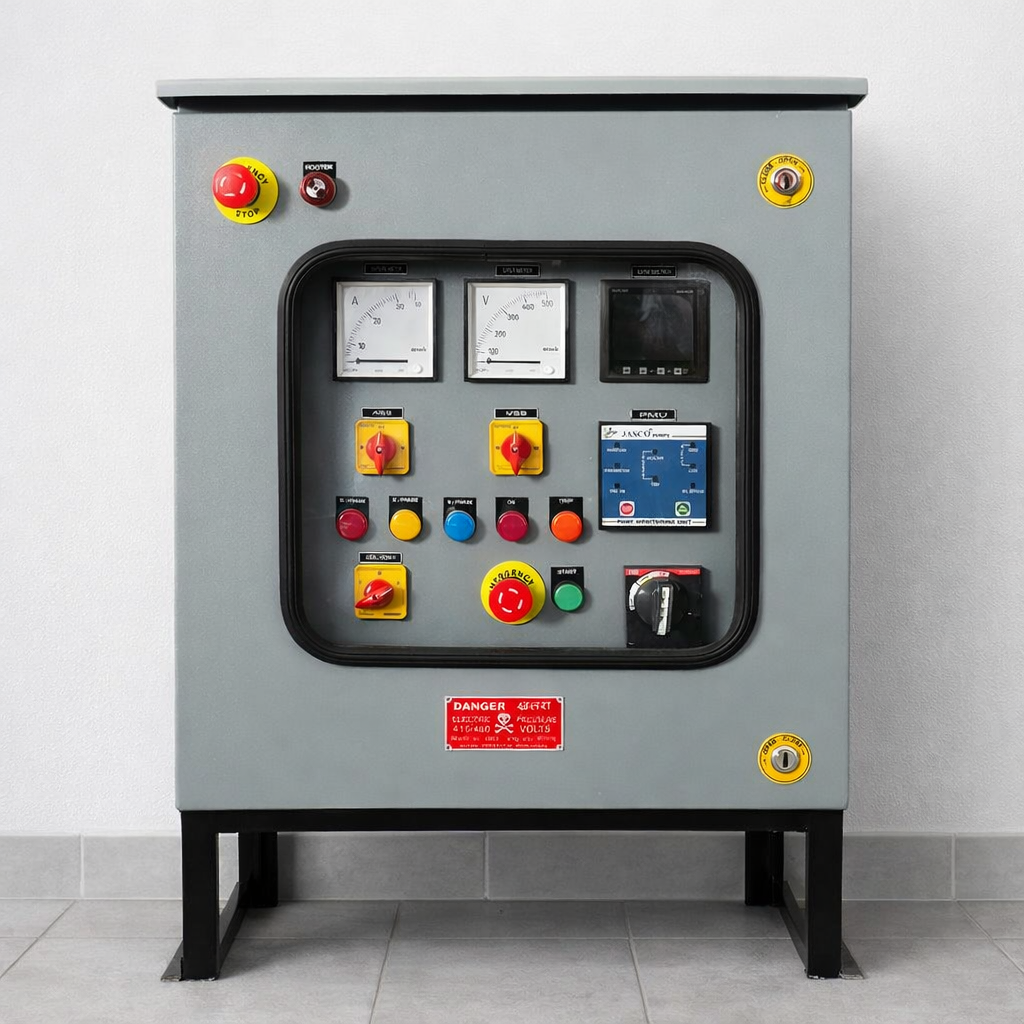
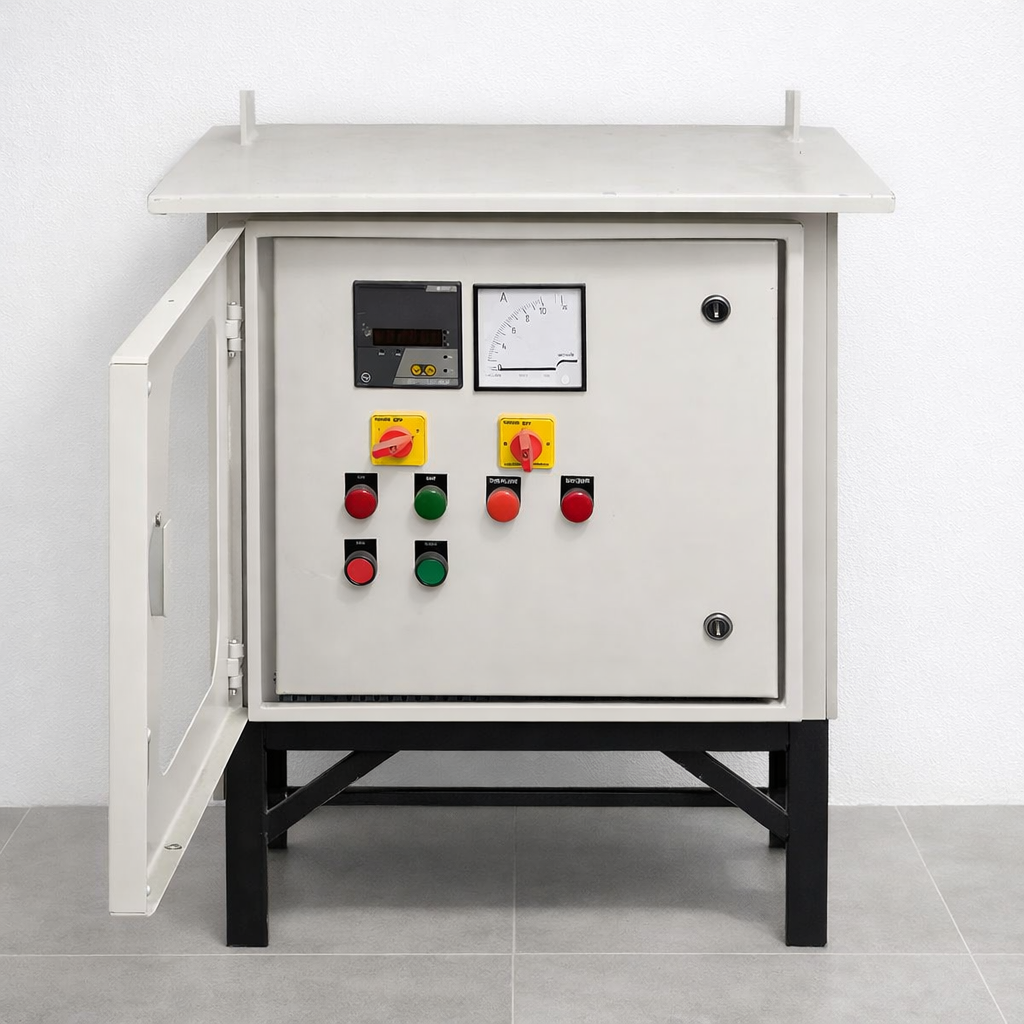
The Direct-On-Line (DOL) Starter is the simplest, most common, and least expensive type of motor starter used for three-phase $\mathbf{AC}$ squirrel-cage induction motors. It is also known as a full-voltage starter.
The DOL starter connects the motor directly to the full supply voltage, applying $100\%$ of the rated voltage and frequency instantaneously.
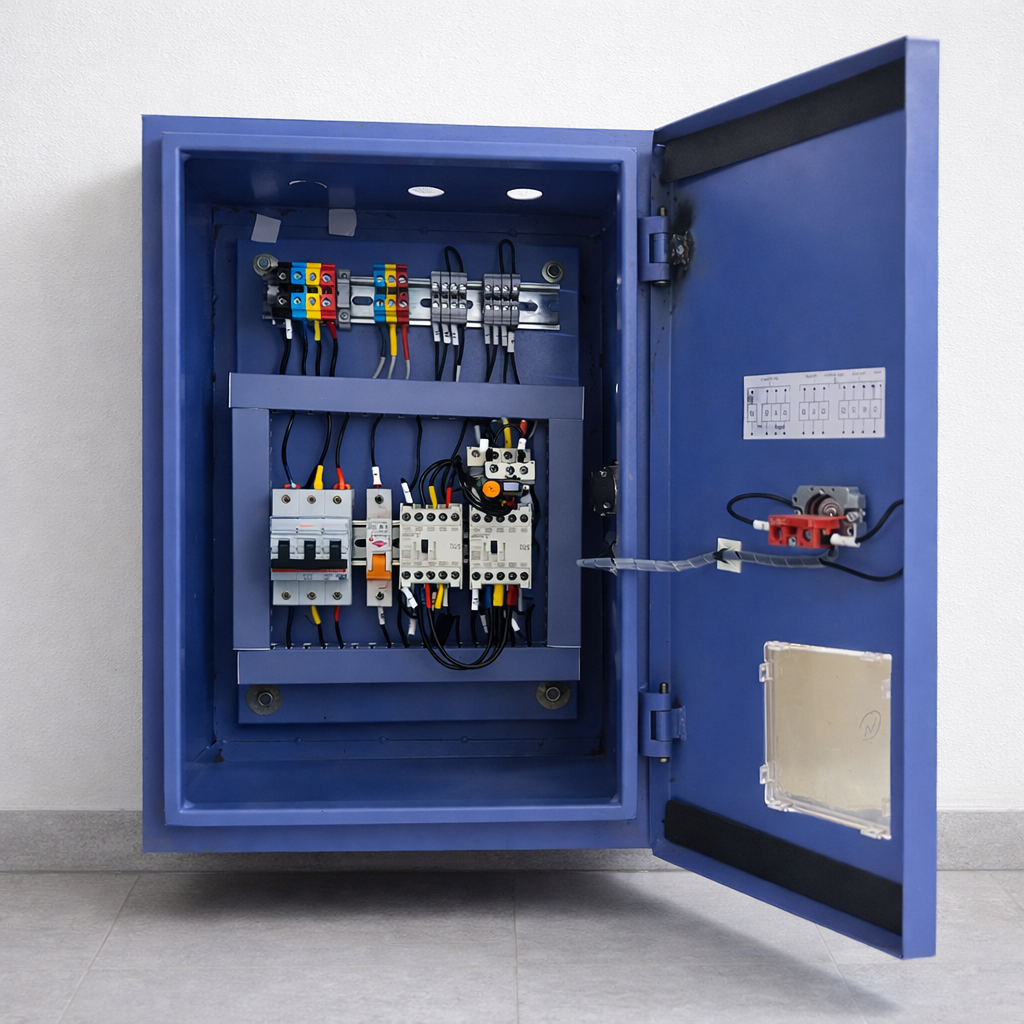
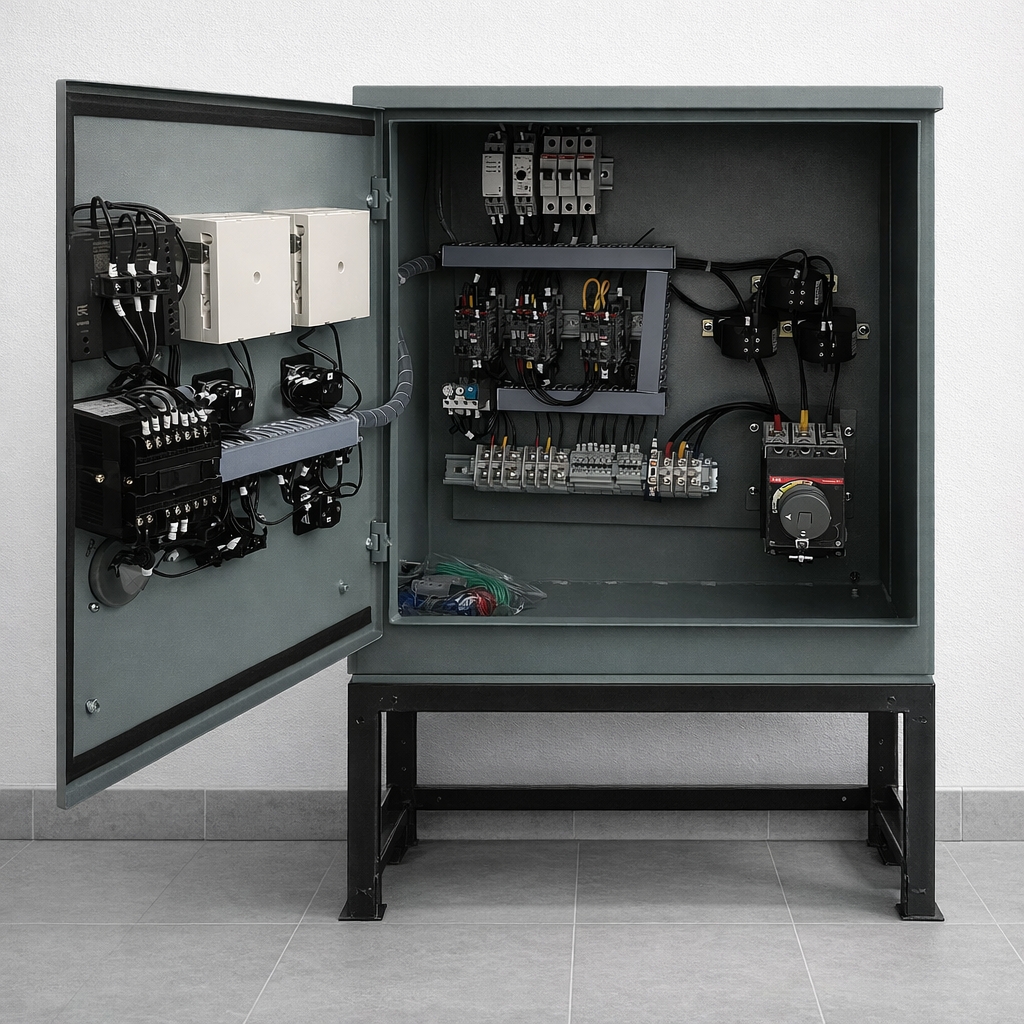
A DOL starter panel primarily consists of three essential components:
An electrically controlled switch that connects the motor to the main power lines when its coil is energized. It is the primary switching device.
A crucial safety device connected in series with the motor windings. It monitors the motor’s running current and trips the circuit (opens the contactor’s control circuit) if the current exceeds the full-load rating for a prolonged period, protecting the motor from overheating and damage.
Simple momentary switches (often wired with a separate control voltage) used by the operator to energize or de-energize the contactor coil.
The DOL starter uses a simple control circuit that incorporates a latching mechanism (often called “holding” or “seal-in” contact), where an auxiliary contact on the main contactor is wired in parallel with the start button. This allows the contactor to remain energized and “sealed in” after the start button is released, keeping the motor running until the stop button or the overload relay interrupts the circuit.
The design and operation of the DOL starter make it ideal for specific applications but unsuitable for others due to its effect on the electrical system and the motor itself:
| Advantages | Limitations |
|---|---|
| Simplicity: Very easy to understand, install, and maintain due to its basic components. | High Starting Current: The motor draws a very large inrush current (typically 5 to 7 times the full-load current). |
| Cost-Effective: It is the least expensive starter option available. | Voltage Dips: The high inrush current can cause significant voltage dips (brownouts) on the supply line, potentially affecting other sensitive equipment. |
| High Starting Torque: Provides the maximum possible starting torque, making it suitable for motors that start under full load. | Mechanical Stress: The sudden high torque causes mechanical shock and stress to the motor, couplings, and connected machinery. |
DOL starters are generally used for smaller motors (typically under 5 hp or 7.5 hp) or in systems where the electrical supply capacity is large enough to handle the starting current without suffering major voltage fluctuations.
2020-2021 Nutral Powertech | All Rights Reserved. | Website Designed By : Industry Lead - +91 8000121171