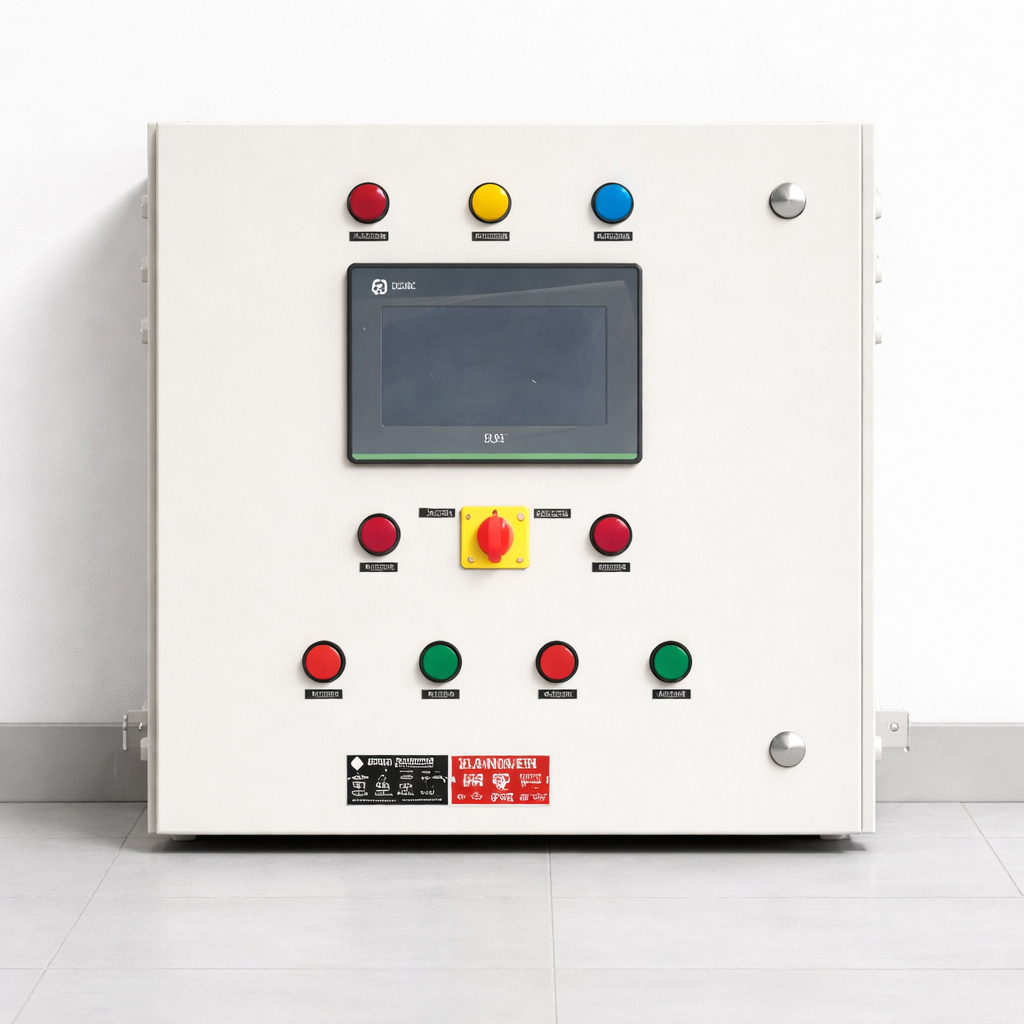
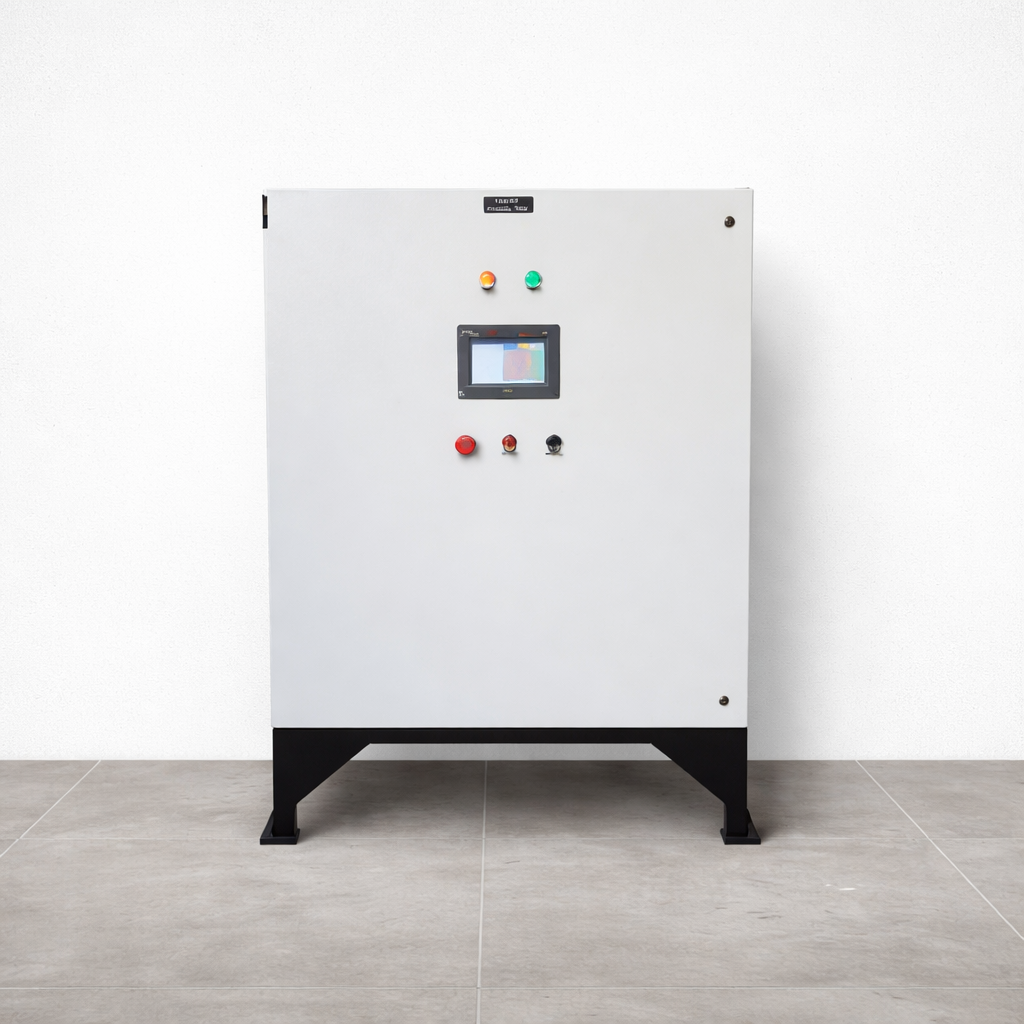
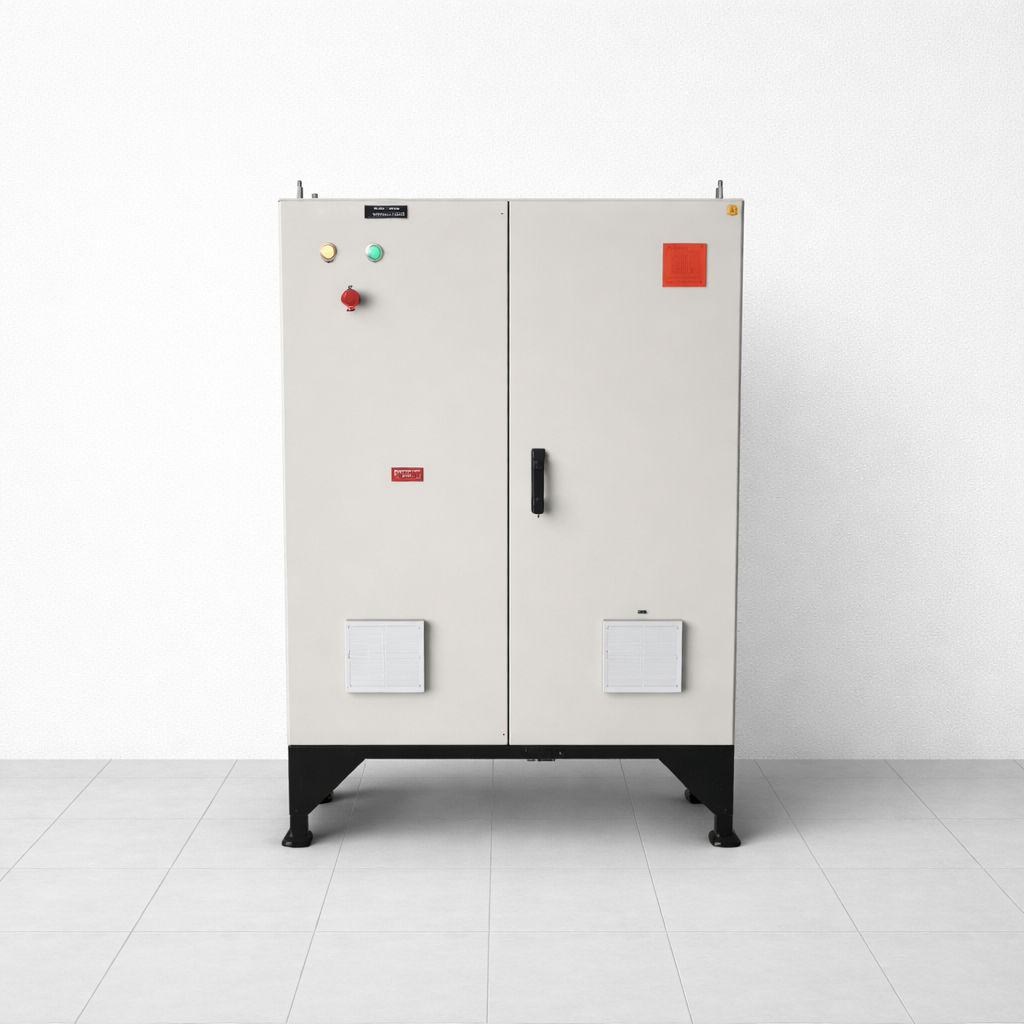
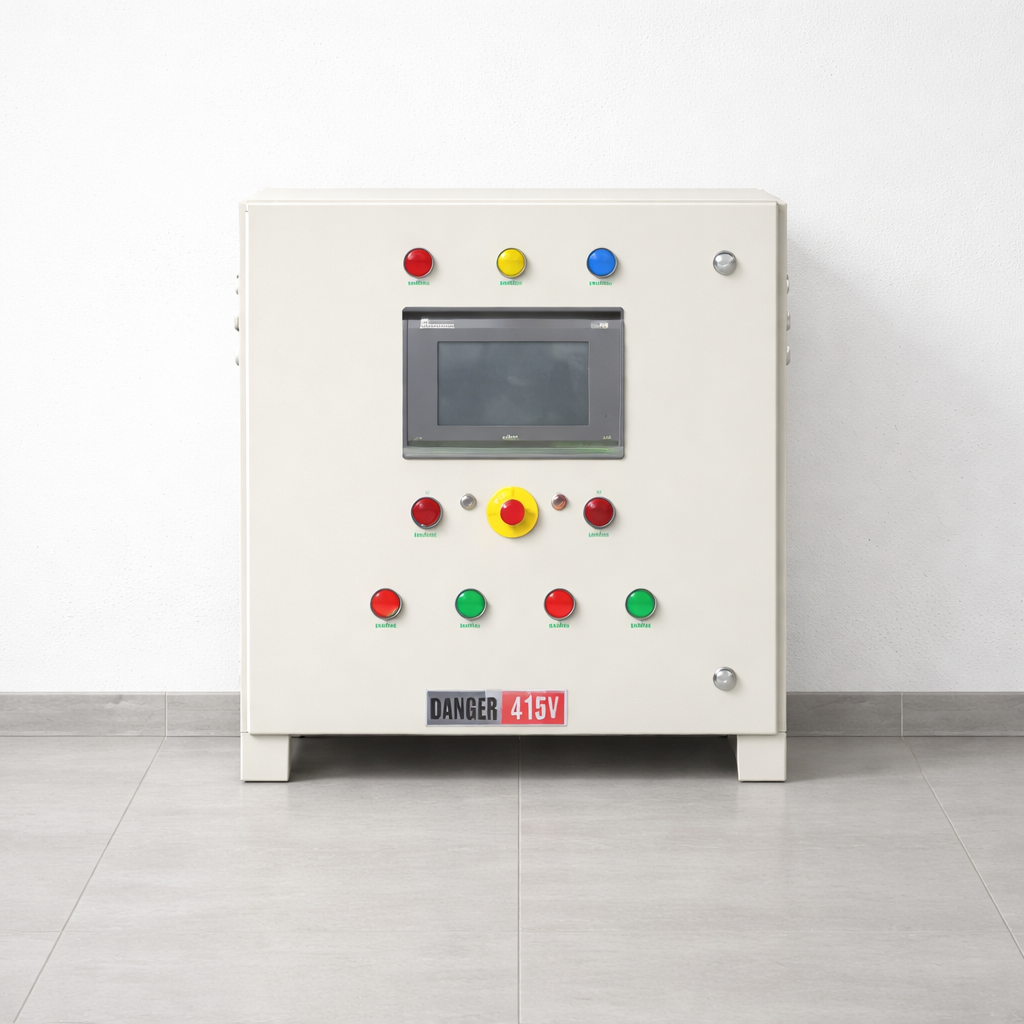
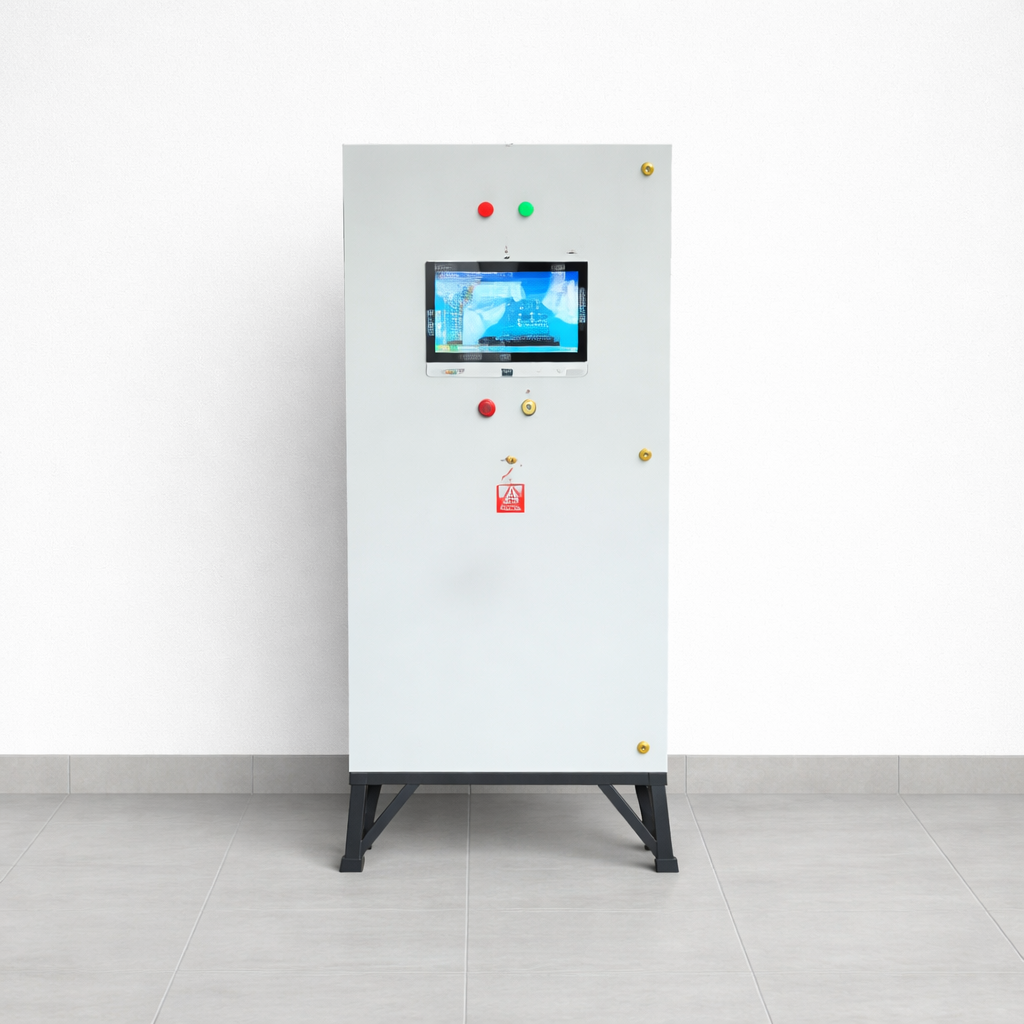
An Electrical PLC Panel (or PLC Control Panel) is the central command station—the brain—of an automated industrial machine or process. It is a robust metal enclosure (cabinet) that houses all the electrical components necessary to run an automated system, with the Programmable Logic Controller (PLC) being the core component.
The primary purpose of the panel is to monitor inputs (sensors, switches) and control outputs (motors, valves, lights) based on a programmed logic, ensuring the industrial process runs safely, efficiently, and reliably.
The Programmable Logic Controller (PLC) is a small, rugged industrial computer designed to operate reliably in harsh environments (dust, vibration, temperature fluctuations) where standard PCs would fail.
The PLC panel organizes and protects all necessary devices required for operation, dividing them into power and control sections.
| Component | Function |
|---|---|
| Programmable Logic Controller (PLC) | The “brain.” Executes the control program based on inputs and determines the outputs. |
| Power Supply | Converts the incoming high-voltage AC (Alternating Current) to lower, stable DC (Direct Current) voltage (typically 24V DC) required by the PLC and control devices. |
| Input/Output (I/O) Modules | The interface. Connects the PLC’s internal logic to the outside world. Inputs receive signals from sensors, and outputs send signals to actuators. |
| Circuit Breakers / Fuses | Safety and protection. Protect wiring, PLC, and components from short circuits and overloads. |
| Terminal Blocks | Wiring organization. Provide a safe, structured point for connecting field wiring from sensors and motors to internal panel wiring. |
| Relays / Contactors / Motor Starters | Output actuation. Used to switch on/off or control high-power devices (motors, heaters) using low-power signals from PLC outputs. |
| Human-Machine Interface (HMI) | Operator access. A touchscreen or panel used to monitor system status, view alarms, and change control parameters. |
The PLC panel operates on a continuous, high-speed loop called the Scan Cycle, the fundamental mechanism of industrial control.
This cycle repeats continuously—often thousands of times per second—so the system reacts instantly and reliably to changes in the process.
2020-2021 Nutral Powertech | All Rights Reserved. | Website Designed By : Industry Lead - +91 8000121171