Operator Interface
It is the main point of interaction, featuring large HMIs (Human-Machine Interfaces), pushbuttons, indicator lights, selector switches, and joysticks.
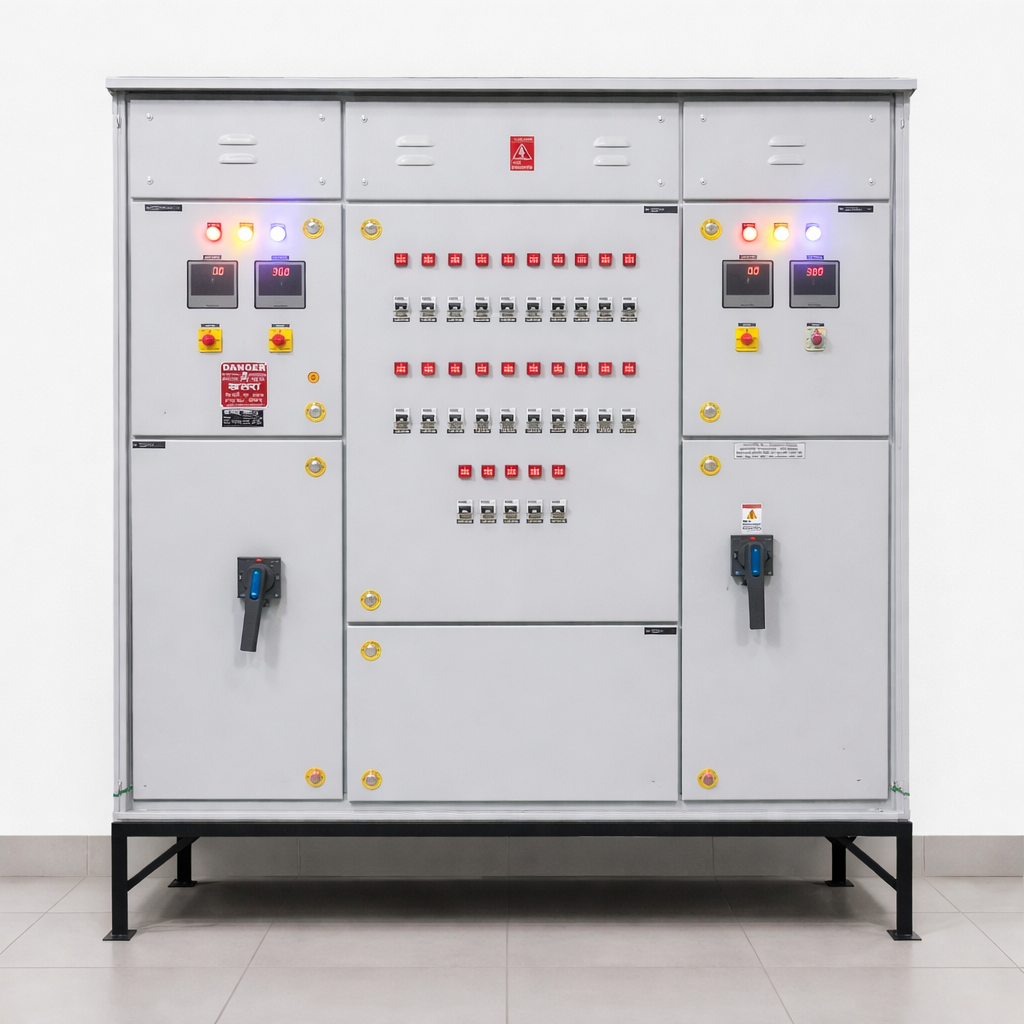
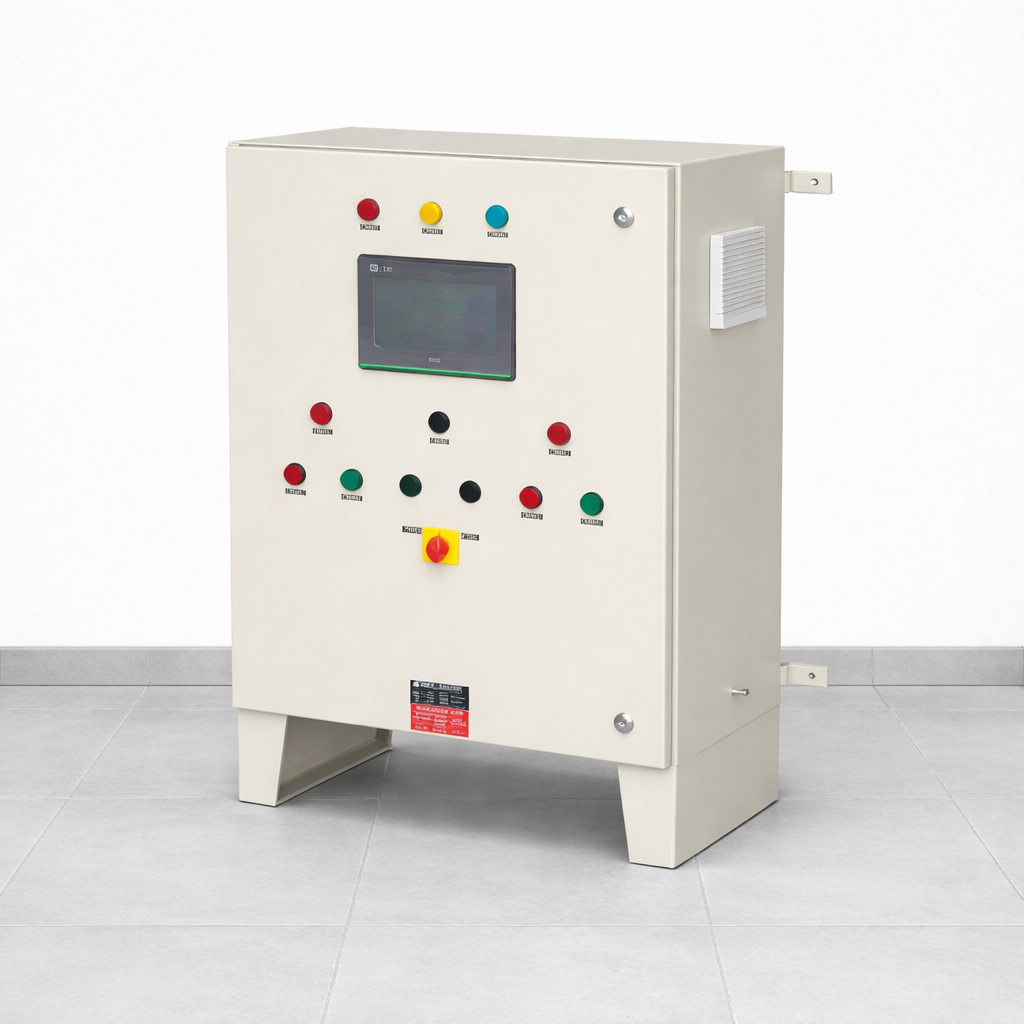
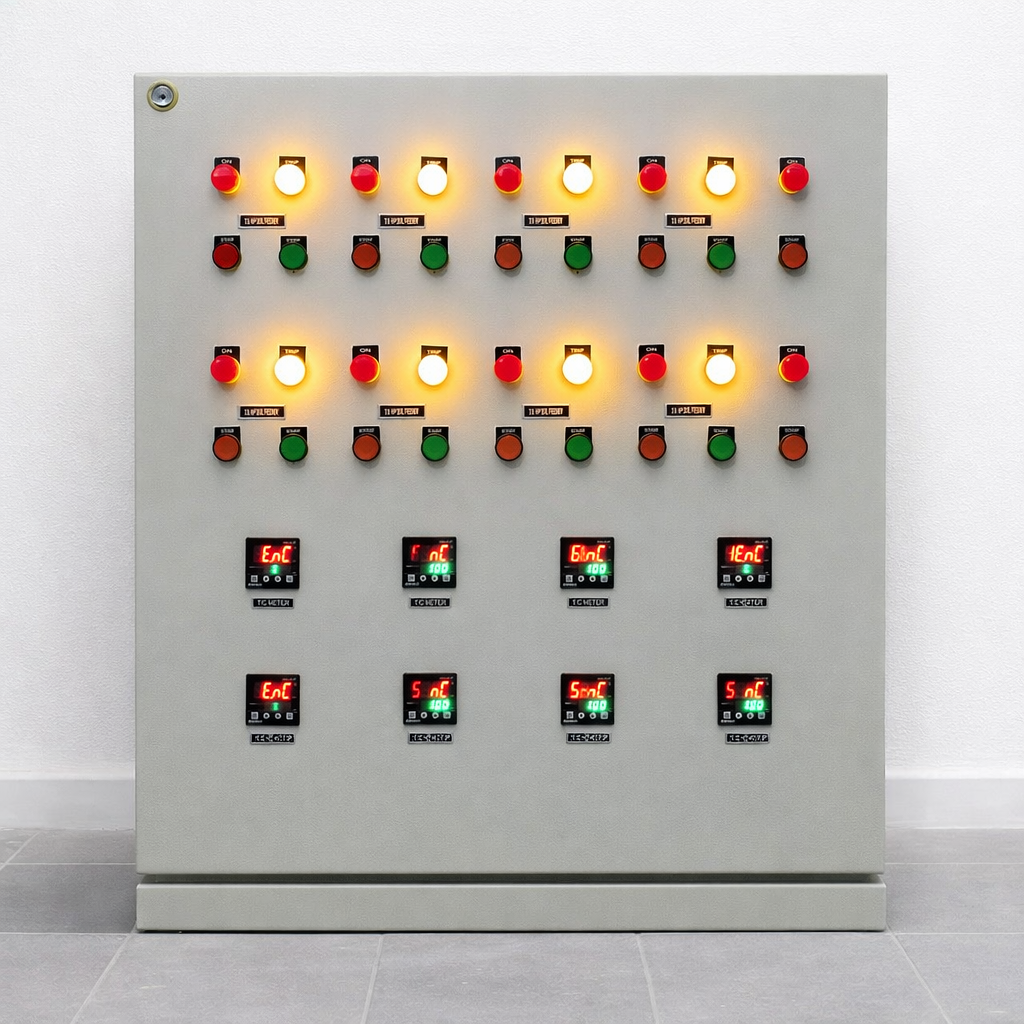
A Desk-type Electrical Panel, often referred to as a Control Kiosk, is a specialized floor-standing enclosure designed primarily to house the Human-Machine Interface (HMI) and control devices for an industrial process or machine.
Unlike a standard vertical electrical panel, the kiosk panel features an angled or horizontal top surface, resembling a desk or podium, which allows the operator to comfortably stand or sit while monitoring and controlling the system.
The primary purpose of the desk-type design is to provide an ergonomic and centralized station for the operator.
It is the main point of interaction, featuring large HMIs (Human-Machine Interfaces), pushbuttons, indicator lights, selector switches, and joysticks.
It consolidates all necessary control elements for a complex process (e.g., continuous casting in a steel plant, a complex conveyor system, or a water treatment plant) into one secure, accessible location.
The slanted surface ensures easy viewing of gauges and screens, and comfortable access to controls, reducing operator fatigue during long shifts.
A typical desk-type panel is structured in two main sections:
This section is focused purely on the operator interface and typically contains:
This lower, vertical section is similar to a standard electrical cabinet and houses the “brains” and power components:
Desk-type panels are primarily found in heavy industries where centralized, continuous operator control is required.
Chemical plants, refineries, and food/beverage processing.
Large crane operation, rolling mills, and mining equipment control.
SCADA stations for water and wastewater treatment plants.
Control stations for assembly lines and transfer machines.
2020-2021 Nutral Powertech | All Rights Reserved. | Website Designed By : Industry Lead - +91 8000121171