Nutral Powertech · Industrial Blog
Solar & EV Charging LT Panel Manufacturers
Understand the critical role of Solar & EV Charging LT Panels for efficient power distribution in Ahmedabad's growing infrastructure. Learn how to select reliab
Why This Matters in Ahmedabad
Ahmedabad is a significant industrial and commercial hub experiencing substantial growth in both renewable energy adoption and electric vehicle infrastructure. The city's industrial estates, commercial complexes, and residential developments are integrating solar power systems to reduce operational costs and meet sustainability goals. Simultaneously, the push for EV adoption requires a robust network of charging stations, each demanding reliable power distribution. This dual demand creates a specific need for specialized LT panels capable of handling the unique characteristics of solar PV arrays and high-current EV charging loads, making the expertise of local manufacturers particularly valuable.
What is a Solar & EV Charging LT Panel — Overview
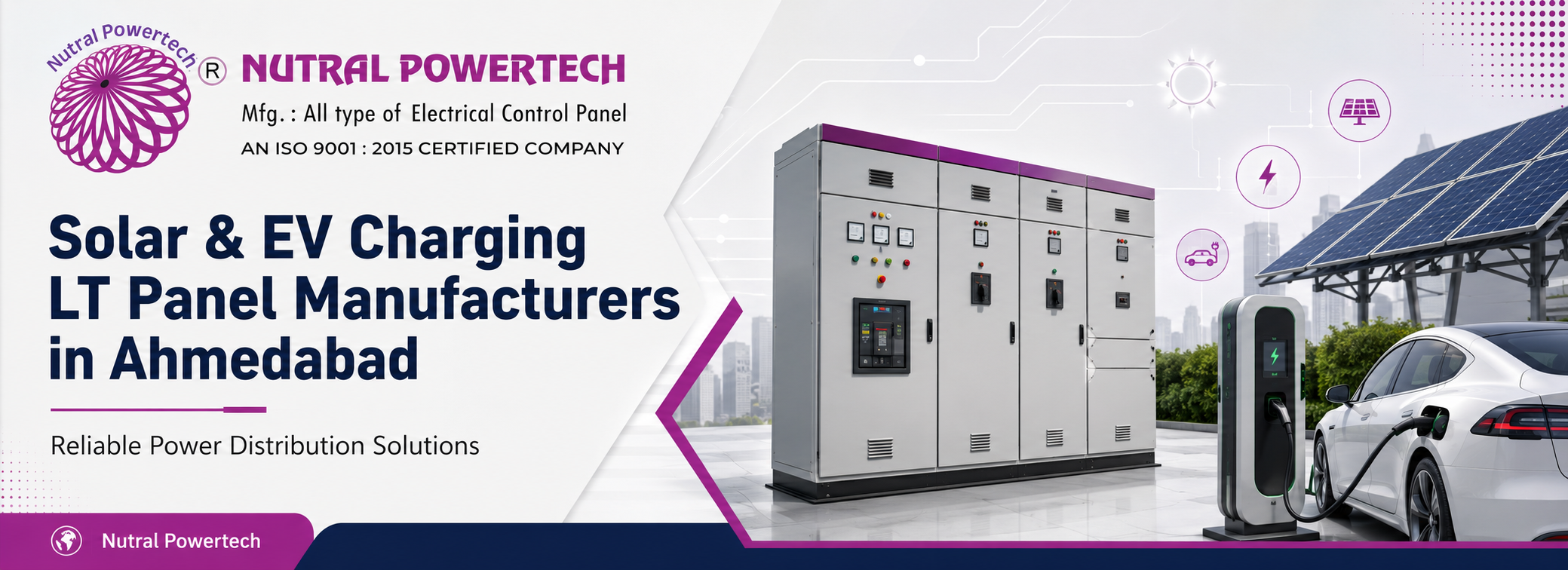
A Solar & EV Charging LT Panel is a sophisticated electrical distribution board designed to manage and control low-tension power specifically for solar photovoltaic (PV) installations and electric vehicle (EV) charging infrastructure. These panels serve as the central point for receiving power from solar inverters or the grid, distributing it to EV chargers, and managing auxiliary loads. They incorporate essential protective devices, metering equipment, and control mechanisms to ensure safe, efficient, and reliable power flow. Their design accounts for the intermittent nature of solar power and the high, transient loads associated with EV charging, differentiating them from standard LT panels.
Key Features and Technical Specifications
- Robust Enclosure Design: IP-rated enclosures for protection against dust, moisture, and environmental factors, suitable for outdoor or industrial settings.
- Integrated Protection Devices: Includes circuit breakers, surge protection devices (SPDs), and residual current devices (RCDs) for fault detection and safety.
- Advanced Metering Capabilities: Digital meters for monitoring voltage, current, frequency, power factor, and energy consumption for both solar input and EV charging output.
- Busbar System: High-conductivity copper or aluminum busbars designed for specific current ratings, ensuring efficient power transmission.
- Load Management & Control: Incorporates contactors, relays, and programmable logic controllers (PLCs) for intelligent load switching and demand management.
- Thermal Management: Designed with adequate ventilation or cooling systems to dissipate heat generated by high current flows, preventing overheating.
- Compliance with Standards: Manufactured to adhere to relevant national and international electrical safety and performance standards (e.g., IEC, IS).
Industrial Applications and Use Cases
- Commercial Solar Installations: Distributing power from rooftop solar arrays to various loads within commercial buildings, including offices, malls, and data centers.
- Industrial Solar Farms: Managing power output from large-scale ground-mounted solar plants, feeding into the factory grid or directly to machinery.
- Public EV Charging Hubs: Providing reliable and protected power distribution to multiple EV charging points in public parking lots, service stations, and municipal areas.
- Fleet Charging Depots: Supplying power to a fleet of electric vehicles in logistics centers, bus depots, or corporate campuses, ensuring efficient charging cycles.
- Residential Complex EV Charging: Integrating solar power with EV charging infrastructure within large residential societies, balancing grid supply and renewable energy.
- Hybrid Microgrids: Facilitating power flow and control in systems combining solar generation, battery storage, and EV charging, often in remote or off-grid locations.
How to Choose the Right Solar & EV Charging LT Panel
Selecting the appropriate Solar & EV Charging LT Panel requires careful consideration of several technical and operational factors. A well-chosen panel ensures system longevity, safety, and efficiency. Buyers should evaluate potential manufacturers based on their proven capability to deliver solutions tailored to specific project demands.
- Capacity and Scalability: Assess the panel's current and voltage ratings to match the present and future power demands of your solar array and EV chargers.
- Certifications and Compliance: Verify that the manufacturer adheres to relevant electrical safety standards such as IS/IEC, ensuring product reliability and regulatory compliance.
- Supplier Experience and Track Record: Choose manufacturers with a demonstrated history in designing and producing specialized panels for solar and EV applications.
- Customization Capabilities: Confirm the manufacturer can tailor panel dimensions, component selection, and control logic to fit unique site constraints and operational requirements.
- Component Quality: Inquire about the brands and quality of internal components like circuit breakers, contactors, and meters, as these directly impact panel performance and lifespan.
- After-Sales Support and Service: Evaluate the manufacturer's commitment to installation guidance, maintenance support, and availability of spare parts.
Quality Standards and Compliance
Adherence to stringent quality standards and compliance regulations is non-negotiable for Solar & EV Charging LT Panels. These panels operate at critical junctures of power distribution, making safety and reliability paramount. Buyers must ensure that manufacturers follow Indian Standards (IS) such as IS 8623 for low-voltage switchgear and control gear assemblies, and relevant parts of IEC 61439. Additionally, panels should incorporate components that meet specific product standards, and the overall manufacturing process should ideally be ISO 9001 certified. Verifying these certifications and demanding compliance documentation before selection helps ensure the panels are safe, durable, and perform as expected under various operational conditions.
Why Company Experience and Capability Matters
The complexity of integrating solar power generation with high-demand EV charging requires a manufacturer with deep technical understanding and proven capability. Nutral Powertech, established in 2015, has developed significant experience in manufacturing diverse electrical panels, including specialized LT panels. Our team focuses on a meticulous manufacturing process, from design conceptualization to final assembly, ensuring each panel meets precise specifications. We emphasize robust quality control at every stage, selecting reliable components and conducting thorough testing. This commitment to technical excellence and customization allows us to deliver panels that are not only compliant with industry standards but also optimized for the specific challenges of solar and EV infrastructure, providing reliable and efficient power management solutions.
Installation, Maintenance and Care Tips
Proper installation and regular maintenance are crucial for the long-term performance and safety of Solar & EV Charging LT Panels. Following manufacturer guidelines is essential to prevent operational issues and extend the lifespan of the equipment.
- Professional Installation: Always engage certified electricians or technicians experienced in industrial electrical installations to handle the panel setup. Incorrect wiring or grounding can lead to severe safety hazards and system failures.
- Environmental Considerations: Ensure the panel is installed in a location that protects it from direct sunlight, excessive moisture, and extreme temperatures, unless specifically designed for such conditions. Adequate ventilation around the panel is also important to prevent heat buildup.
- Regular Inspections: Conduct routine visual inspections for any signs of wear, corrosion, loose connections, or damage to the enclosure. Check for dust accumulation inside the panel, which can impair component performance.
- Component Testing: Periodically test circuit breakers, relays, and other protective devices to ensure they are functioning correctly. This might involve using specialized testing equipment or following a planned maintenance schedule.
- Tighten Connections: Over time, electrical connections can loosen due to vibrations or thermal cycling. Regularly check and tighten all terminal connections to prevent arcing and power losses.
- Software Updates: For panels with integrated smart controls or PLCs, ensure that firmware and software are updated as recommended by the manufacturer to maintain optimal performance and security.
Frequently Asked Questions
The key difference lies in their design and component selection, which are optimized for specific power characteristics. Solar & EV Charging LT Panels are engineered to handle the intermittent and variable power output from solar arrays and the high, often transient, current demands of EV charging, incorporating specialized protection and metering for these applications.
These panels contribute to energy efficiency by providing precise control and monitoring of power flow. They help minimize transmission losses through optimized busbar designs and efficient component selection. Additionally, integrated metering allows for accurate tracking of energy consumption and generation, enabling better management and identification of potential inefficiencies.
Yes, these panels can often be integrated into existing electrical systems, provided the current infrastructure has sufficient capacity and is compatible with the panel's specifications. A thorough site assessment by a qualified electrical engineer is necessary to determine the feasibility and design the integration plan safely and effectively.
Critical safety features include robust short-circuit protection, overcurrent protection, surge protection devices (SPDs) to guard against lightning strikes or voltage spikes, and residual current devices (RCDs) for earth fault protection. These features are essential to protect personnel, equipment, and the overall electrical system from damage.
With proper installation, regular maintenance, and the use of quality components, a Solar & EV Charging LT Panel can typically have a lifespan of 15 to 25 years. Environmental conditions, operational load, and the quality of initial manufacturing all play significant roles in determining the actual service life.
While the primary function of an LT panel is typically for AC power distribution, specialized Solar & EV Charging LT Panels are designed to manage both AC and DC aspects. They often include sections for DC input from solar inverters before conversion to AC, and can manage AC power distribution to EV chargers, which then convert to DC for vehicle charging.
Conclusion
The evolution of energy landscapes in Ahmedabad, driven by solar power adoption and the growth of EV infrastructure, underscores the critical need for specialized Solar & EV Charging LT Panels. These essential components ensure the safe, efficient, and reliable distribution of power, supporting both sustainability goals and operational demands. When considering such an investment, prioritizing manufacturers with proven experience, adherence to quality standards, and robust technical capabilities is paramount. A well-designed and expertly manufactured panel forms the backbone of a resilient and future-ready electrical system, contributing significantly to the long-term success of any solar or EV charging project.
Get In Touch
Nutral Powertech