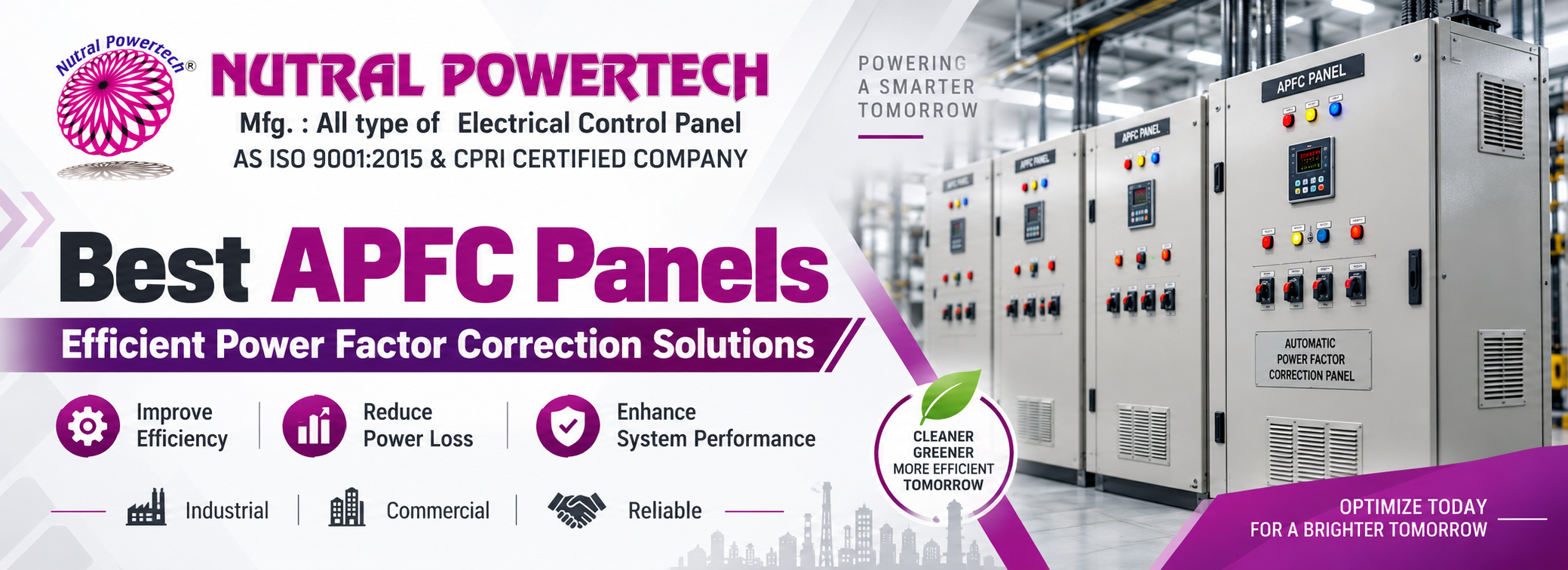
Best APFC Panels
In today's energy-conscious industrial and commercial landscape, efficient power management is not just a goal; it's a necessity. Among the most effective solutions for optimizing electrical systems is the Automatic Power Factor Correction (APFC) panel. These sophisticated units play a crucial role in ensuring that electrical power is utilized effectively, leading to significant cost savings and improved operational stability. This guide delves into what constitutes the best APFC panels, their applications, benefits, and how to select the ideal unit for your specific requirements.
Understanding APFC Panels
An APFC panel is an electrical system designed to improve the power factor of an electrical load. Power factor is a measure of how effectively electrical power is being converted into useful work. A low power factor indicates that a significant portion of the supplied power is being wasted as reactive power, which does not contribute to productive work but still incurs charges from the utility provider. This waste often stems from inductive loads common in industrial settings, such as motors, transformers, and fluorescent lighting.
APFC panels automatically detect the reactive power demand of the system and switch in appropriate capacitor banks to counteract it. This automatic adjustment ensures that the power factor remains close to unity (1.0), which is the ideal scenario. By maintaining a high power factor, businesses can avoid penalties imposed by electricity boards, reduce overall energy consumption, and enhance the efficiency and lifespan of their electrical equipment.
The core components of an APFC panel typically include:
- Capacitor Banks: The primary elements that provide the reactive power needed to improve the power factor.
- Contactors or Switches: Used to connect or disconnect capacitor steps based on the system's reactive power needs.
- Controller: The 'brain' of the panel, which monitors the power factor and controls the switching of capacitor steps. Modern controllers are microprocessor-based for precise and rapid response.
- Protection Devices: Such as fuses, circuit breakers, and surge protectors to safeguard the panel and the electrical system.
Applications and Use Cases
The versatility and effectiveness of APFC panels make them indispensable in a wide array of settings. Identifying the best APFC panel often depends on the specific demands of the application:
🏭
Industrial Facilities
Heavy inductive loads from motors, pumps, compressors, and machinery in manufacturing plants, mills, and processing units. APFC panels here significantly reduce energy bills and prevent voltage sags.
🏢
Commercial Buildings
Large office complexes, shopping malls, and hotels that utilize extensive lighting systems, HVAC units, and elevators, all of which can lead to a poor power factor.
💡
Data Centers & IT Hubs
These facilities have high and constant power demands from servers and cooling systems. Maintaining a stable power factor is crucial for operational reliability and preventing costly downtime.
🏗️
Infrastructure Projects
Large-scale projects like airports, railway stations, and pumping stations that require robust and efficient power distribution systems.
Key Benefits of Implementing APFC Panels
Investing in a high-quality APFC panel offers numerous advantages that contribute to operational efficiency and financial health:
Reduced Electricity Bills
By improving the power factor, APFC panels help avoid penalties for low power factor levied by utility companies and can even qualify for lower tariffs, leading to substantial savings.
Improved Voltage Stability
A good power factor reduces voltage drops in the distribution system, ensuring that equipment receives a more stable voltage supply, thus improving performance and lifespan.
Increased System Capacity
By reducing reactive power, the available capacity of transformers and cables is better utilized for active power, effectively increasing the overall capacity of the electrical system without upgrades.
Energy Conservation
Minimizing reactive power reduces energy losses in the system, contributing to overall energy conservation and a smaller carbon footprint.
Enhanced Equipment Performance
Stable voltage and reduced electrical stress lead to better performance and longer operational life for motors, generators, and other electrical machinery.
Choosing the Best APFC Panel: A Buyer's Guide
Selecting the right APFC panel is critical for maximizing benefits. Consider these factors:
Key Selection Criteria
- Power Factor Target: Determine the desired power factor (e.g., 0.95 to 1.0) based on utility requirements and your system's load characteristics.
- System Load: Analyze the total KVA and reactive power demand. This helps in sizing the APFC panel correctly.
- Load Fluctuations: Assess how rapidly your load changes. This dictates the speed and number of steps required in the capacitor bank. Fast-changing loads need multi-step, faster-responding controllers.
- Harmonics: If your system has significant harmonic distortion (from VFDs, SMPS, etc.), standard capacitor banks can be overloaded or damaged. Tuned or detuned APFC panels with reactors are necessary.
- Control Technology: Microprocessor-based controllers offer precise power factor monitoring, automatic step selection, and protection features.
- Environmental Conditions: Consider the operating environment (temperature, humidity, dust) to ensure the panel's durability and reliability.
- Protection and Safety: Ensure the panel includes adequate protection against overloads, short circuits, and over-voltage.
- Manufacturer Reputation: Opt for reputable manufacturers known for quality, reliability, and good after-sales support.
Buyer Insight:
Always consult with an electrical engineer or a specialized APFC panel supplier to accurately assess your system's needs. Incorrect sizing or type of APFC panel can lead to resonance issues, equipment damage, or ineffective power factor correction.
Questions to Ask Before Buying
To ensure you are selecting the most suitable APFC panel, consider asking potential suppliers the following:
- What is the KVAR rating of the panel, and how is it derived?
- What type of controller do you use, and what are its key features (e.g., step logic, response time)?
- Are the capacitor banks suitable for potential harmonic distortion in my system? If not, what are the alternatives (e.g., detuned reactors)?
- What is the warranty period and what after-sales support is available?
- Can you provide details on the protection mechanisms included in the panel?
- What is the expected lifespan of the capacitor banks and other critical components?
NUTRAL POWERTECH: Your Partner in Power Efficiency
At NUTRAL POWERTECH, we understand the critical importance of efficient power management for modern businesses. We are dedicated to providing robust and reliable power solutions designed to optimize your electrical systems and reduce operational costs. Our commitment is to deliver APFC panels that meet stringent quality standards and are tailored to the unique demands of various industrial and commercial applications.
We focus on building APFC panels that offer superior performance and longevity. By leveraging industry best practices and quality components, our solutions help businesses achieve higher power factors, leading to significant energy savings and enhanced electrical system stability. Partner with NUTRAL POWERTECH to ensure your power infrastructure is efficient, reliable, and cost-effective.
Frequently Asked Questions (FAQ)
What is the primary function of an APFC panel?
The primary function of an APFC panel is to automatically maintain a high power factor (close to unity) in an electrical system by switching capacitor banks in or out as needed to compensate for reactive power drawn by inductive loads.
What is reactive power and why is it a problem?
Reactive power is a type of power that does not perform useful work but is necessary to establish and maintain magnetic fields in inductive equipment (like motors). A high level of reactive power leads to a low power factor, causing increased current, voltage drops, energy losses, and potential penalties from utility providers.
Can APFC panels be used with variable frequency drives (VFDs)?
Yes, but caution is needed. VFDs can generate harmonics. If significant harmonics are present, standard APFC panels can be damaged due to resonance. Tuned or detuned APFC panels, which incorporate reactors, are recommended in such cases to mitigate harmonic issues.
How do I determine the correct KVAR rating for my APFC panel?
The correct KVAR rating depends on your system's existing load and the target power factor. It's calculated based on the difference between the current reactive power and the reactive power needed to achieve the desired power factor. Consulting an electrical professional is highly recommended for accurate sizing.
What is the difference between manual and automatic power factor correction?
Manual power factor correction involves fixed capacitor banks that are switched on or off manually. Automatic Power Factor Correction (APFC) uses intelligent controllers to monitor the power factor and automatically adjust the capacitor bank size to maintain the optimal power factor under varying load conditions, offering much greater efficiency and accuracy.
Optimize Your Power Factor Today
Ready to reduce your electricity costs and improve your electrical system's performance? Discover how NUTRAL POWERTECH's range of high-quality APFC panels can be the solution for your business. Contact us to discuss your specific requirements and get a tailored recommendation.
Learn More About NUTRAL POWERTECH APFC Panels